
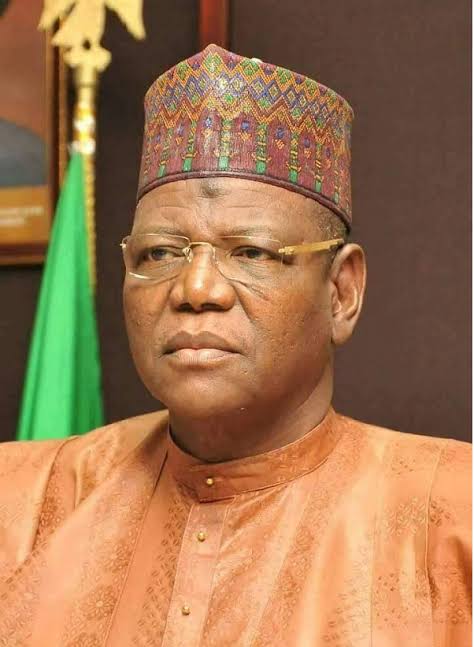
The Supreme Court has reinstated the money laundering case instituted by the Economic and Financial Crimes Commission (EFCC) against former Jigawa State Governor, Sule Lamido, overturning an earlier decision that halted the trial.
In a unanimous judgment delivered on Friday by a five-member panel of the apex court, the justices allowed separate appeals filed by the EFCC and nullified the 25 July 2023 ruling of the Court of Appeal, Abuja. The lead judgment was read by Justice Abubakar Umar.
The Supreme Court affirmed the decision of the Federal High Court, Abuja, presided over by Justice Ijeoma Ojukwu, which held that Mr Lamido and his co-defendants had a case to answer. The court consequently ordered that the matter be returned to the Federal High Court for continuation of trial from the defence stage.
Mr Lamido was first arraigned by the EFCC in 2015 alongside his two sons and associated companies on 37 counts of money laundering involving about ₦1.35 billion. The alleged offences were said to have occurred during his tenure as governor of Jigawa State between 2007 and 2015.
According to the anti-graft agency, the former governor abused his office by laundering funds allegedly received as kickbacks from state government contracts.
Other defendants in the case include Mr Lamido’s sons, Aminu and Mustapha Lamido; Aminu Wada Abubakar; and two companies, Bamaina Holdings Limited and Speeds International Limited.
During the trial, the EFCC called more than 16 witnesses before closing its case. The defendants subsequently filed a no-case submission, arguing that the prosecution had failed to establish sufficient evidence to warrant them opening their defence.
In November 2022, Justice Ojukwu dismissed the application and directed the defendants to enter their defence. Mr Lamido challenged that ruling at the Court of Appeal.
In its judgment delivered in July 2023, the Court of Appeal upheld the no-case submission, holding that the Federal High Court in Abuja lacked the territorial jurisdiction to try the case. The appellate court ruled that the matter ought to have been heard in Jigawa State, where the alleged offences were said to have been committed.
Dissatisfied with that decision, the EFCC approached the Supreme Court in August 2023, urging it to overturn the appellate court’s verdict.
In its ruling on Friday, the apex court agreed with the EFCC, set aside the Court of Appeal’s judgment, and restored the authority of the Federal High Court, Abuja, to continue hearing the case.
The decision clears the way for the resumption of a trial that has lasted nearly a decade and comes at a time when Mr Lamido has recently signalled interest in seeking the chairmanship of the Peoples Democratic Party (PDP).
Source: Premium Times